NEA Tick Ratings and Energy-Efficient Aircon Care
You notice a rising electric bill long before a room actually feels warmer. Our service team sees this exact scenario play out weekly across Singapore.
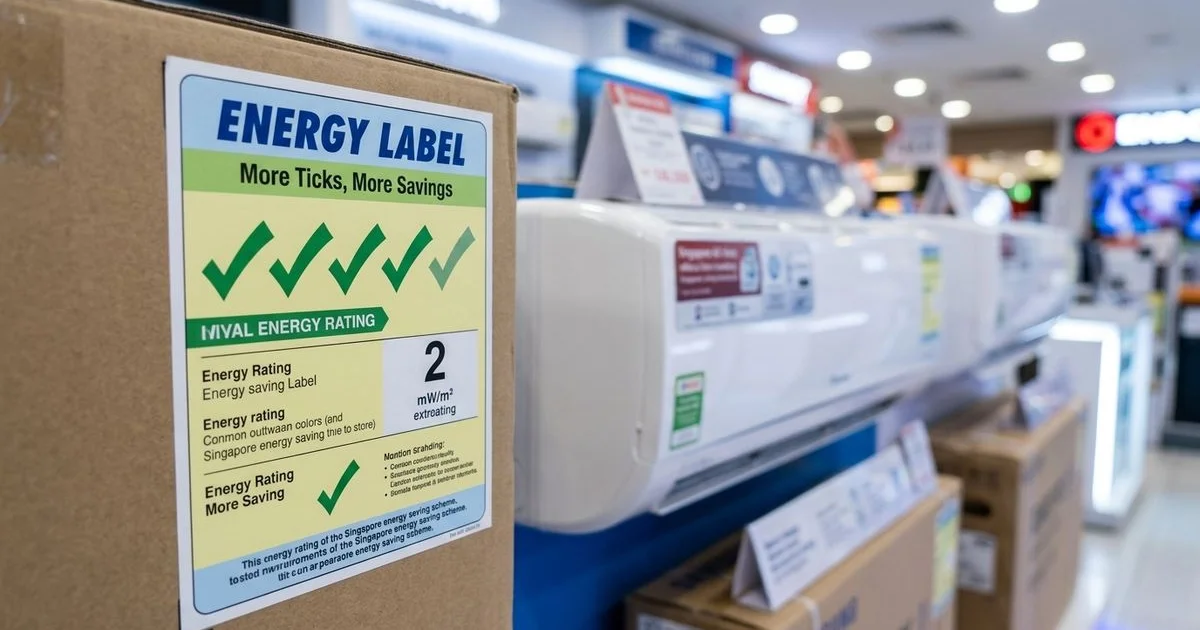
The aircon tick rating singapore residents see on their wall units tells a very specific story about power consumption. Understanding this energy label aircon system helps homeowners make much smarter replacement decisions.
We will break down what these efficiency numbers mean for your wallet. Then you can explore a few practical ways to respond to higher electricity tariffs.
What the nea tick rating aircon scale measures
The NEA energy label uses a one to five tick scale to rate cooling efficiency. This rating derives from the Cooling Seasonal Performance Factor (CSPF). Our technicians rely on this metric because it shows how much cooling output you get per unit of electricity consumed under standardised Singapore conditions.
Higher ticks simply mean more cooling per kilowatt-hour. The Mandatory Energy Labelling Scheme (MELS) administers this entire system.
We find the estimated annual electricity cost figure to be highly practical. The calculation assumes roughly 2,000 hours of typical usage per year. This standardized approach lets you compare units directly without doing complex CSPF math yourself.
The scale, with rough cost implications
The table below outlines the relationship between tick ratings and yearly running expenses. These rough ranges assume comparable daily usage. Our financial modelling uses Singapore’s Q2 2026 electricity tariff of 29.11 cents per kWh.
| Tick rating | CSPF range | Annual cost (typical 1.5HP) |
|---|---|---|
| 1 tick | Lowest | $450 to $600 |
| 2 ticks | Below average | $400 to $500 |
| 3 ticks | Average | $350 to $450 |
| 4 ticks | Above average | $300 to $400 |
| 5 ticks | Best | $250 to $350 |
Heavy users will definitely see the financial gap widen between models. Light users generally see this cost difference narrow.
Our testing shows that a modern five-tick model, like the Daikin iSmileEco series, uses advanced R32 refrigerant to hit top CSPF scores. This specific technology lowers your monthly power bills significantly compared to older hardware. The label simply gives an honest, objective comparison point.
MEPS, the minimum standard
Singapore’s Minimum Energy Performance Standards (MEPS) phase out the lowest-efficiency units. The legal threshold has tightened significantly over the past decade. Our team notes that today, most aircon units sold new in Singapore are three ticks or higher.
The current legal minimum for split-type air conditioners actually sits at two ticks. You will still see older single-tick units in second-hand markets. We often encounter these legacy models when inspecting older HDB blocks.
The April 2026 Energy Conservation update officially expands MEPS requirements to cover all self-imported appliances starting July 2026.
Buyers cannot use overseas platforms to bypass local energy efficiency rules anymore. Our installers ensure every new unit meets or exceeds the mandatory MEPS floor.
Picking a tick rating when replacing
The right tick rating homeowners should choose depends heavily on usage patterns. A proper assessment of your cooling habits prevents wasted capital. We strongly recommend using the following usage tiers as a guide.
- 2 hours daily or less: 3 tick is fine. Higher units rarely recover their upfront premium in this scenario.
- 4 to 6 hours daily: 4 tick is the sweet spot. You get meaningful electricity savings without overpaying for the hardware.
- 6 plus hours daily: 5 tick is mandatory. Payback happens in three to four years, and lifetime savings clear $1,500 to $3,000 over a ten-year life cycle.
- Server room, F&B, retail: 5 tick always. Heavy commercial usage makes the initial premium completely trivial.
A premium five-tick model like the Mitsubishi Starmex System 3 currently costs roughly $3,000 to $3,500. This upfront price tag deters some buyers initially.
Our clients now benefit from the expanded government initiative offering up to $400 in Climate Vouchers. Eligible HDB and private households can claim these vouchers until December 2027. These funds effectively wipe out the price gap between mid-tier and high-efficiency units.
Why maintenance matters as much as rating
A five-tick unit with a dirty coil performs exactly like a three-tick unit. The label represents the manufactured efficiency of the clean hardware. Our daily service logs show that what you actually pay reflects how well you maintain the system.
High humidity in Singapore creates the perfect breeding ground for mold and bio-slime. This stubborn buildup blocks the evaporator coil and instantly tanks your CSPF score. We consider the following maintenance steps mandatory after picking a high-tick unit.
- Annual chemical wash to keep the coil completely clean. Standard overhauls in Singapore typically cost between $130 and $150 per fan coil.
- Quarterly servicing to catch potential problems early.
- Honest replacement of dirty filters between technician visits. A severely clogged filter restricts airflow and increases energy consumption by up to 15 percent.
Making a broader replacement decision requires careful evaluation of your current hardware. You can read a detailed breakdown of when to upgrade to an energy efficient aircon in our aircon repair vs replacement guide.
We strictly follow BCA-compliant bracket requirements for every job. Check out the aircon installation page to see what proper setup looks like.