7 Signs Your Aircon Needs Servicing (And Which Are Urgent)
The seven signs aircon needs servicing, and what each one means
We see the toll Singapore’s humid climate takes on residential cooling systems every single day. Year-round moisture and heavy daily use force units from brands like Daikin and Mitsubishi Electric to work overtime.
Our team often notices that recognising the exact signs aircon needs servicing early is the simplest way to prevent massive repair bills. Knowing exactly which warning signs require immediate action, versus those that just need a quick clean, will save you serious money.
We recommend referencing our aircon repair services and the aircon not cooling guide for a complete breakdown of emergency procedures.
Let’s break down these common aircon symptoms and explore the exact steps required to get your home comfortable again.
1. Weak airflow despite a clean filter, routine
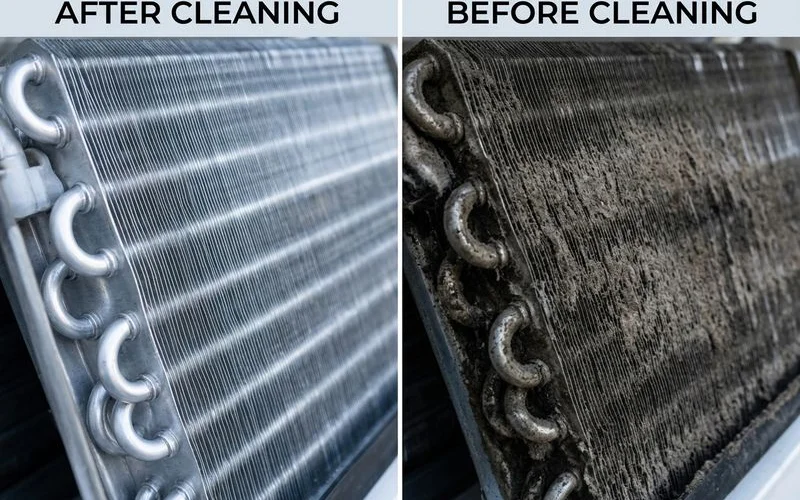
If you have just cleaned the filter and the breeze still feels noticeably thin, a clogged evaporator coil is likely the culprit. We find that thick layers of surface dust restrict the air passing through the unit, which completely bypasses the clean filter.
This specific issue forces the fan motor to work harder and drastically reduces your cooling power. Our technicians suggest that if you are deciding when to service aircon, this is the perfect time to book a routine visit or move forward your annual chemical wash.
A professional deep cleaning addresses several hidden issues:
- Clears stubborn dust from the indoor evaporator fins.
- Removes sticky biofilm that traps moisture.
- Unblocks the surrounding air passages to restore factory-level circulation.
2. Warm air or no cooling, urgent
Warm air points directly to a failing compressor, faulty sensors, or a severe lack of refrigerant. We notice that low gas levels, whether R32 or R410A, almost always indicate an active leak rather than a simple shortage.
Catching this early is vital, as a minor pipe leak repair costs around $80 to $150 in Singapore, while replacing a damaged compressor can easily exceed $800. Our advice is to switch off the system completely after 30 minutes of warm output and call for a professional diagnosis.
Running the unit indefinitely is a common mistake that forces the remaining gas to overwork. We have seen this specific error freeze the entire coil and trigger a cascading hardware failure.
To prevent further damage when warm air blows, follow these steps:
- Turn off the main power switch immediately.
- Do not attempt to restart the unit to test it.
- Schedule a prompt gas pressure check.
3. Water dripping from the indoor unit, urgent
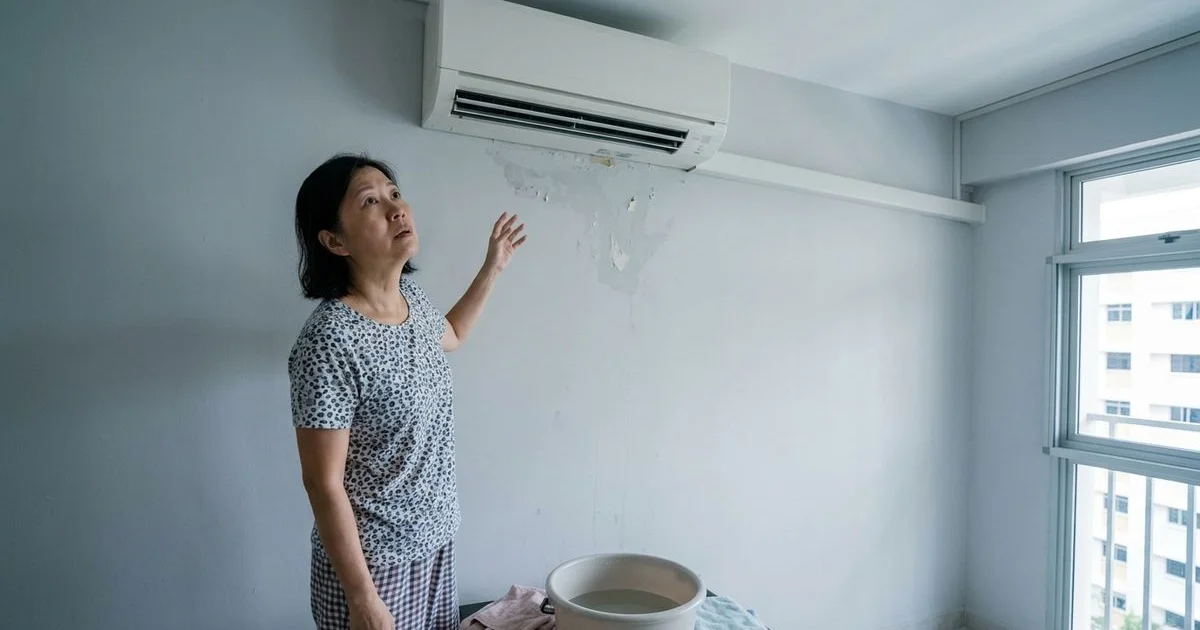
Water dripping inside your room typically means a blocked drainage pipe, a cracked drip tray, or a frozen coil that is actively thawing. We frequently clear out a thick, slimy substance known locally as “aircon jelly” from these blocked pipes.
This stubborn buildup forms when bacterial biofilm and dust mix together in Singapore’s high humidity. Our emergency dispatch team can usually resolve this quickly using a specialised vacuum or drainage rod.
Waiting too long is the real danger, as overflowing water quickly damages plasterboard ceilings and expensive flooring. We strongly urge you to switch the power off immediately and place a thick towel under the leak.
Common reasons your indoor unit overflows include:
- A buildup of bacterial jelly choking the main drain pipe.
- Hair and debris clogging a shared bathroom floor trap.
- A cracked or misaligned internal plastic water tray.
4. Musty or sour smell when running, chemical wash
A sour or musty smell blowing from your vents means mould is actively growing inside the dark, damp evaporator coil. We expect to see this fungal buildup within a year for almost every residential system operating in Singapore’s sticky climate.
Standard wiping simply cannot reach the spores trapped deep between the metal cooling fins. Our chemical overhaul process uses safe, targeted solutions to dissolve this biological growth entirely.
Expert Insight: Trying to mask the musty smell with room fresheners only hides the symptoms. A proper chemical wash is the only way to eliminate the root cause and stop spores from spreading into your breathing air.
Ignoring the smell allows the spores to circulate throughout your bedroom, which often triggers allergies and respiratory problems. We recommend scheduling a deep wash within a week or two, well before the odour becomes an unbearable household issue.
A standard chemical wash in 2026 typically costs between $85 and $150, making it a highly affordable way to protect your indoor air quality.
5. Higher electricity bill, no usage change, efficiency loss
An unexplained spike in your monthly utility statement often points straight to a struggling, inefficient cooling system. We know that a system clogged with dust is forced to work up to 30% harder just to push air into the room.
With SP Group’s electricity tariffs hovering around 29.72 cents per kWh in the second quarter of 2026, this lost efficiency burns through your household budget incredibly fast. Our routine maintenance focuses heavily on cleaning these critical heat exchange surfaces.
Restoring the coils to their original condition easily recovers that lost 10% to 15% efficiency margin. We consistently see electricity bills drop back to normal levels right after a thorough professional clearing.
| Condition | Cooling Power | Estimated Energy Waste |
|---|---|---|
| Clean Coils | 100% Optimal | 0% |
| Mild Dust Buildup | Noticeably Slower | 10% to 15% |
| Heavy Blockage | Very Weak | Up to 30% |
6. Strange noises, usually urgent
A sudden change in the sound of your unit is one of the clearest indicators that mechanical parts are failing. We classify most abnormal sounds as urgent, as ignoring them usually leads to a complete breakdown of the motor or compressor.
Rattling generally points to a loose mounting bracket or vibrating fan housing, which is a medium-priority fix. Our technicians listen for specific audio cues to diagnose internal faults quickly.
Hearing a single click when the unit starts is completely normal. We warn customers, however, that repeated clicking with no cold air means the external compressor is failing to engage.
Other critical sounds you should never ignore include:
- Hissing or bubbling: Points to high-pressure refrigerant escaping into the air.
- Harsh grinding: Indicates complete failure of the internal fan motor bearings.
- High-pitched squealing: Often caused by a worn or slipping blower belt.
7. Ice visible on copper lines, urgent
Seeing a layer of solid white ice forming on the exposed copper lines outside your window is a major warning sign. We find this freezing effect happens because of severely restricted indoor airflow or a dangerously low refrigerant charge.
Without enough warm room air passing over the cold coils, the moisture simply freezes in place. Our immediate advice is to switch the system off entirely and let the solid ice thaw for at least an hour.
Important Warning: Chipping away the ice with sharp tools will puncture the soft copper pipes and release toxic refrigerant gas into your home.
Running the machinery while it is heavily iced up forces the compressor to overheat, which often leads to a catastrophic burnout. We prefer arriving at a thawed unit so our diagnostic tools can accurately measure the current gas pressure.
Routine vs urgent, quick reference
| Symptom | Urgent? | Likely fix |
|---|---|---|
| Weak airflow | No | Routine service, coil clean |
| Warm air | Yes | Refrigerant or compressor diagnosis |
| Water dripping | Yes | Drainage clear, coil check |
| Musty smell | No (1 to 2 wks) | Chemical wash |
| Higher bill | No | Routine service |
| Rattling | Medium | Mounting tighten |
| Hissing/Burning | Yes | Switch off, immediate call |
| Ice on copper | Yes | Refrigerant + airflow check |
If you are currently experiencing two or more of these signs aircon needs servicing, do not wait for your next scheduled maintenance window. We strongly advise taking action now to protect your hardware from permanent damage.
Fast responses make a difference, as most of our 24/7 dispatch visits succeed when the homeowner calls on the exact same day they notice the issue.
Our team knows that delaying a professional inspection only increases the complexity and cost of the final repair. Protecting your investment requires proactive care.
We are ready to help you restore your home’s comfort quickly and safely, so reach out today to book a comprehensive assessment.