★★★★★
"Previous contractor topped up our gas twice in 3 months. FC pressure-tested first, found the leak in the indoor coil, fixed it once - problem gone."
Aravind Kumar
Sengkang
Refrigerant refills for R22, R32, and R410A units - with leak-check first so we don't just buy you a week.
From $25 – $200 · per top-up; R22 from ~$25/lb, total varies by system charge
A weakly cooling aircon usually isn't low on gas. It's leaking. We pressure-test the closed refrigerant loop before adding any gas, so you pay once and the fix lasts. R22 (legacy units) is priced at about $25 per pound; R32 and R410A vary by system size. If we find a leak, you'll get a flat quote for the repair before we add anything.
FC Aircon Servicing handles R22, R32, and R410A refrigerant top-ups across Singapore, with over 20 years of hands-on experience servicing all major brands. We often hear from homeowners who assume a quick gas refill will fix their warm rooms - but a refrigerant top-up only works when the sealed loop is intact.
The reality is different.
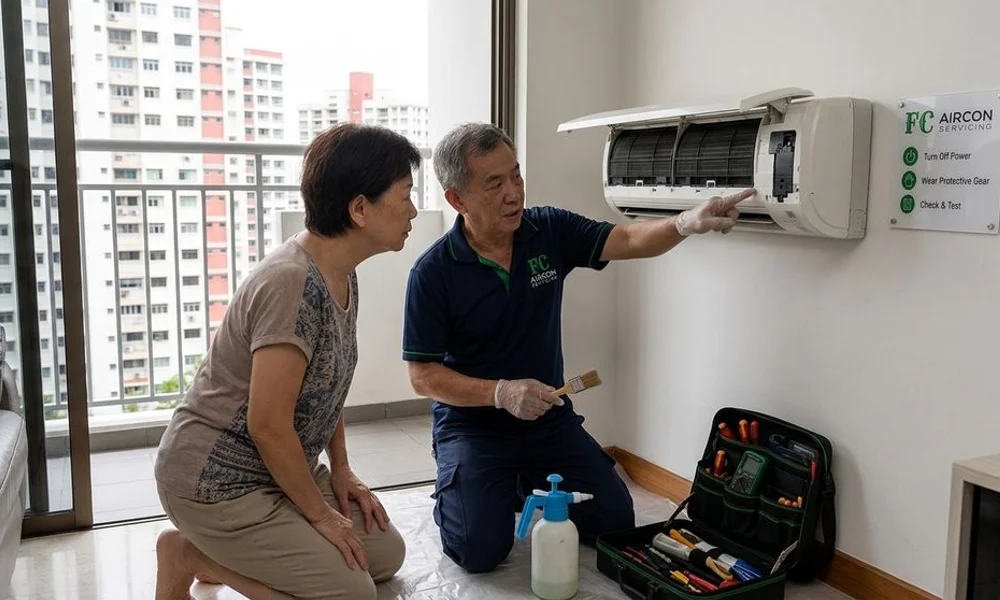
Our technicians will show you exactly how to solve this permanently. Whether you live in an HDB flat, condo, or landed property, the diagnostic process is the same. Let’s go through the steps together.
Our team knows that most calls about weak cooling turn out to be a physical refrigerant leak. Sealed refrigerant loops in Daikin, Mitsubishi, Panasonic, and other major brands do not lose gas naturally. A tiny gap in the copper pipework is usually letting the refrigerant escape.
We have seen homeowners pay for a refill only to have the gas escape again within days. Vibration from everyday operation often loosens copper pipe connections over time. Topping up the system without finding that hole is a terrible waste of money.
FC Aircon Servicing’s technicians refuse to let you pay twice for the exact same problem. A proper pressure test must always come first. This crucial step protects your wallet and guarantees a lasting fix.
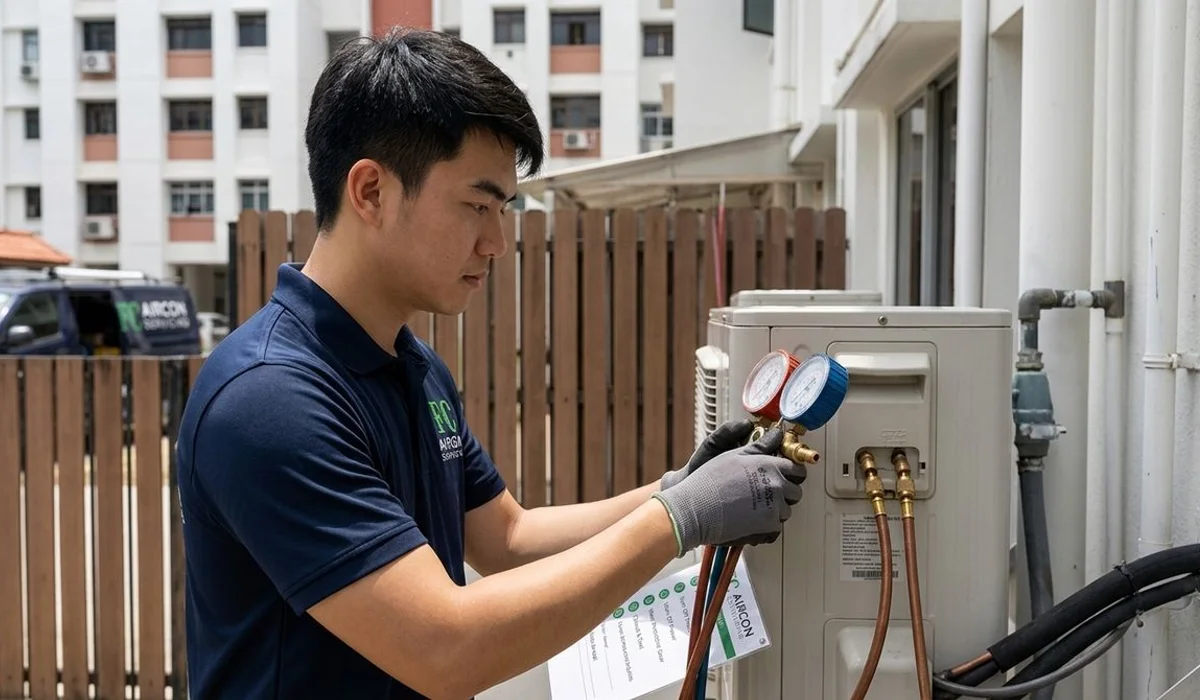
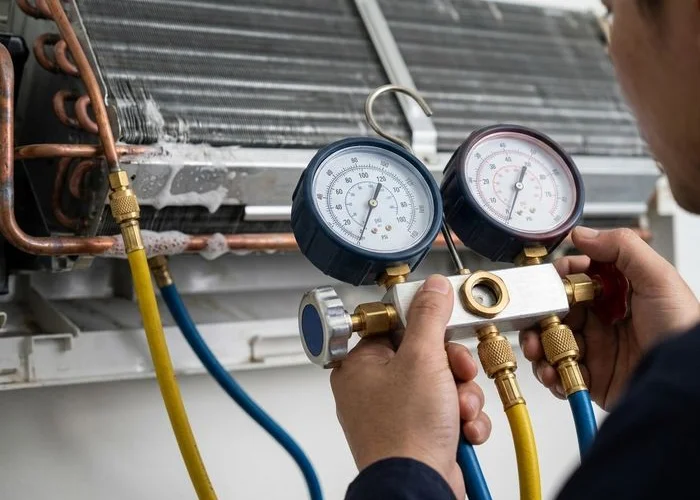
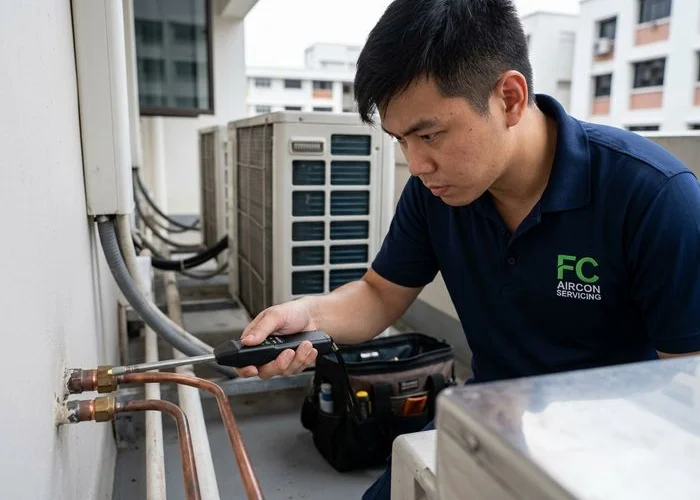
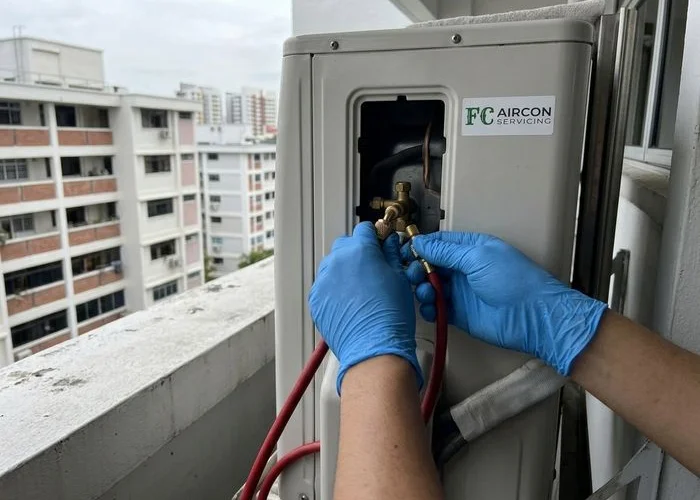
We connect a manifold gauge to the Schrader valve to read the existing pressure levels. An MSA Safety electronic leak detector then traces along the copper lines to pinpoint the fault. Injecting nitrogen gas into the pipes helps reveal the precise location of hidden drops.
Our technicians will give you a flat, transparent quote for the repair before adding any chemical. Here are the most common places where these annoying faults hide:
Understanding the different refrigerant types inside your aircon is essential. We work with three main refrigerants daily to keep homes across Jurong West, Bukit Batok, Tampines, and the rest of Singapore comfortable. Each refrigerant carries different rules, costs, and environmental impacts.
Here is exactly what you need to know about your specific setup.
Our advice is to plan for a replacement if your system uses this older gas. This older chemical typically powers air conditioners that are 15 years old or more. Singapore will see a complete import ban on R22 by 2030 under the Montreal Protocol.
Expect skyrocketing repair costs as supplies shrink. Prices for this phasing-out chemical keep climbing rapidly every year. A modern upgrade is the smartest financial decision.
Our inventory still holds plenty of this gas to service existing machines. You will find this chemical in most mid-2000s to early-2020s installations. The National Environment Agency prohibited the supply of new R410A room units back in October 2022.
We recognize that its high Global Warming Potential rating made it obsolete for new manufacturing. The phase-out process for this product involves a few key points:
A proactive approach saves you from sudden breakdowns.
Our customers love how easily these systems achieve a coveted NEA 5-tick energy efficiency rating. This is the current default for all new installations across the island. It boasts a significantly lower Global Warming Potential of just 675.
We always check your exact model to ensure absolute compatibility before beginning work. The refrigerant type is permanently fixed by your hardware. You cannot simply pump a modern chemical into an old legacy machine.
FC Aircon Servicing keeps pricing fully transparent so you know exactly what to expect. Unlike a routine aircon servicing visit, a refrigerant refill depends heavily on your specific unit size and the gas type required. Average market rates in 2026 show that a complete top-up ranges from S$60 to S$200.
Our standard quotes for the chemical itself are completely separate from any required patching work. Here is a breakdown of the typical per-pound rates you will see today:
| Refrigerant | Typical per-pound rate | Typical system charge |
|---|---|---|
| R22 | From ~$25/lb | 1-2 lbs (System 2), 3-5 lbs (System 4) |
| R32 | ~$30-$40/lb | 1.5-2.5 lbs (System 2), 3-5 lbs (System 4) |
| R410A | ~$35-$45/lb | 2-3 lbs (System 2), 4-6 lbs (System 4) |
A standard R32 refill on a compact System 2 runs roughly $60 to $100. We see larger System 4 setups demanding more volume, which typically costs between $120 and $200.
Budgeting for proper leak detection helps you avoid repeated fees. A professional nitrogen pressure test usually adds an extra $150 to $350 to the final bill.
| Feature | Typical Provider | FC Aircon Servicing |
|---|---|---|
| Leak check before refill | Often skipped | Mandatory on every job |
| Pricing transparency | Quoted after work | Written quote before any work starts |
| Refrigerant types | R22/R410A only | R22, R32, and R410A |
| Availability | Business hours | 24/7 including weekends |
| Experience | Varies | 20+ years, 1,000+ jobs completed |
Our technicians always warn homeowners that skipping the diagnosis guarantees the problem will return. Unscrupulous contractors might skip the leak check entirely just to make a quick buck. Paying S$50 for a careless job costs more when you have to repeat it two weeks later. If your unit needs deeper attention, a chemical wash or chemical overhaul may be the better first step before any refrigerant refill.
Here is how to make the most informed decision for your property. For deeper context on which chemical your unit uses and when to plan a replacement, see our refrigerant types guide. This resource breaks down the exact lifespans of popular models.
Our team also created an aircon not cooling triage page that walks through the quick checks before you call. Those simple troubleshooting steps might save you the cost of a service visit entirely. If your unit is beyond repair, we also handle full aircon installation for all system types. Reach out to us today to schedule your professional leak check and refrigerant refill - we serve Woodlands, Sengkang, Bedok, and every corner of the island.
The quote you get on the phone is the price you pay. CBD jobs +$20 disclosed before dispatch.
Typical range
$25 – $200
per top-up; R22 from ~$25/lb, total varies by system charge
· Written quote before any work begins.
· Multi-unit discount where applicable.
· Service-contract holders get reduced rates.
View full price list →20+
Daikin, Mitsubishi, Panasonic, Midea, York, Toshiba — all routine.
24/7
Overnight, weekend, public holiday — we answer the line.
$0
Written quote before tools come out. CBD surcharge disclosed upfront.
15,000+
HDB, condo, landed, CBD — across the entire island.
Manifold gauge on the Schrader valve. We read the existing pressure before deciding anything.
Electronic sniffer along copper lines and fittings. If pressure is low, the cause is leak first, not refill.
Either top-up (no leak found) or leak repair + recharge (leak found). Written quote either way.
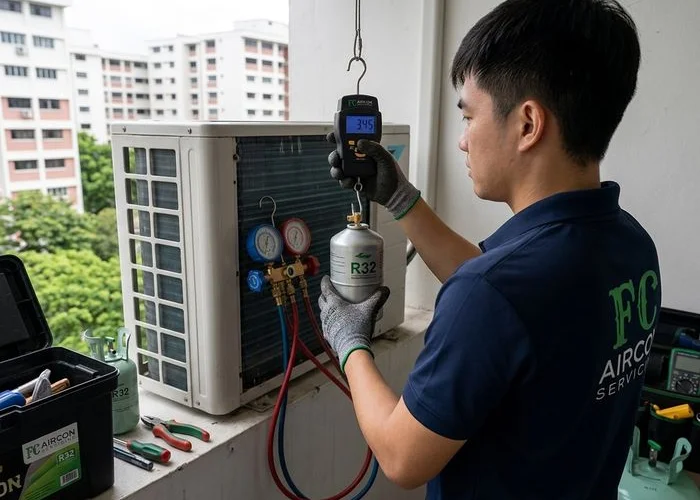
Refrigerant weighed in to manufacturer charge spec. Final cooling test before we leave.
24/7 dispatch. Written quote before any work begins. 90-day workmanship warranty on all repairs.
"Previous contractor topped up our gas twice in 3 months. FC pressure-tested first, found the leak in the indoor coil, fixed it once - problem gone."
Aravind Kumar
Sengkang
"Old R22 unit, needed a top-up. Honest about the phase-out, did the work, told us when to plan a replacement. No upsell."
Mei Ling
Bedok
Because most low-cooling cases aren't low refrigerant - they're a leak that's been losing refrigerant. Topping up a leak buys you about a week; finding and fixing the leak gives you back the unit.
Different refrigerant chemistries. R22 is the legacy refrigerant being phased out worldwide (still in older Singapore units). R32 is the current Singapore standard. R410A is common in mid-2000s to early-2020s units. We handle all three.
Depends on system size and pipe length. A System 2 typically holds 1-2 lbs; a System 4 holds 3-5 lbs. We charge to manufacturer spec, not estimate.
Practically no - R22 is being phased out worldwide and prices keep rising. For R22 units past 10 years, we usually have a frank conversation about R32 replacement.
Only if low gas is the cause. If the coil is dirty, the filter is blocked, or the compressor is weak, gas top-up won't help. Diagnosis matters.
Yes - refrigerant is standard van stock. Most callouts include the top-up in the same visit if no leak is found.
Dig deeper into the decisions, costs, and troubleshooting that come up around gas top-up.
R22 (legacy, phased out, expensive), R32 (current standard, efficient), R410A (mid-generation). How to check which yours uses and what to do.
Read guide → GuideWeak cooling, ice on copper, hissing, higher bills, longer cycles — what each sign means and why a top-up alone often won't fix the problem.
Read guide →Round-the-clock repair for breakdowns, leaks, no-cool, electrical faults, and major component failures across every major brand.
Learn more →Annual deep-clean using safe alkaline solutions to dissolve mould, bacteria, and mineral buildup inside fan coil units.
Learn more →
Refrigerant refills for R22, R32, and R410A units - with leak-check first so we don't just buy you a week. The quote we give you is the price you pay — book in 60 seconds.