Signs Your Aircon Needs a Gas Top-Up (And When It Won't Help)
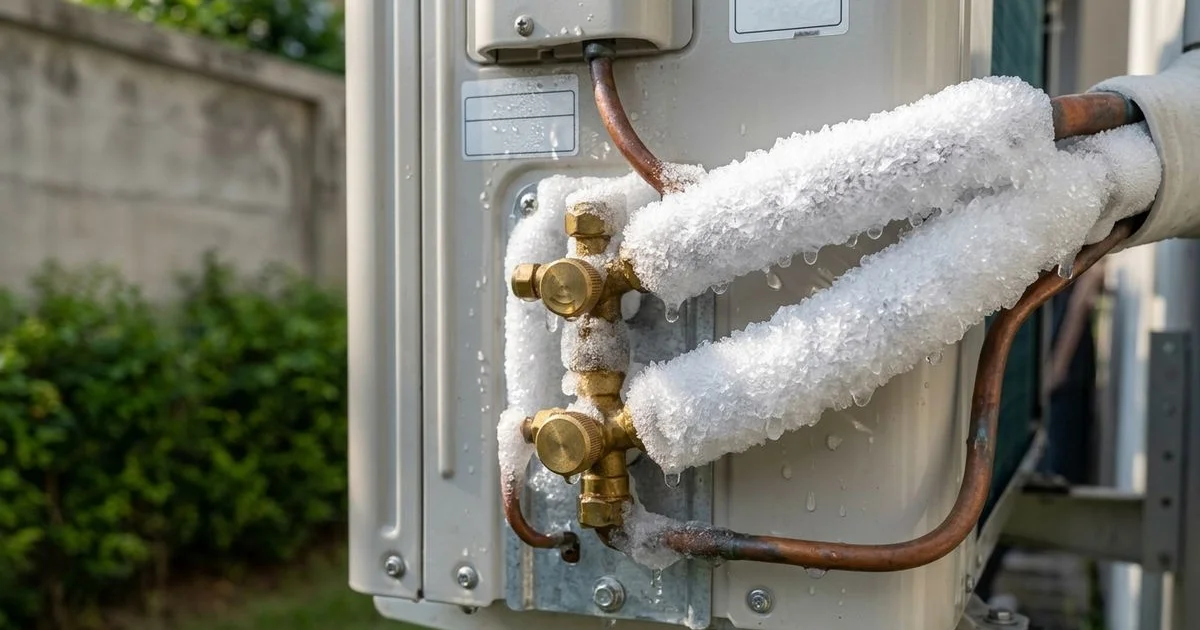
We get calls every day from homeowners sweating in their own living rooms. A system blowing lukewarm air is incredibly frustrating.
Spotting the signs your aircon needs a gas top up early can save you from a major repair bill. Many people assume a quick refill is the only answer. The reality is quite different — our Aircon Gas Top-Up service always starts with a pressure test so you do not pay for refrigerant that is about to leak out again.
The five symptoms of low refrigerant
We look for specific physical clues to confirm a pressure drop. These five symptoms point directly to a compromised system.
1. Weak cooling despite a clean filter
A clear indicator of trouble is aircon weak cooling even after you wash the filters. You should feel a distinct chill from the vents. The temperature of the air leaving the unit should be about 8 to 12 degrees Celsius colder than the room temperature.
Our technicians call this the “Delta T” measurement. If your HDB bedroom is 28 degrees, the air blowing out should measure around 18 degrees or lower. The system simply cannot absorb and remove heat from the room without enough chemical agent inside the coils.
2. Ice on copper refrigerant lines
Finding frost or solid ice on the outdoor copper pipes is a massive red flag. This happens because a drop in pressure forces the remaining chemical to expand too much and drop below freezing. You must switch off the unit at the wall right away.
Running a frozen system forces liquid back into the compressor, which destroys the internal valves. Replacing a ruined compressor often costs more than a brand-new condenser unit. We see this costly mistake happen far too often in Singapore.
3. Hissing near the outdoor unit
A distinct hissing noise near the compressor usually means pressure is actively escaping through a cracked fitting. Modern R410A systems operate under immense stress, often exceeding 110 pounds per square inch of pressure on the low side. This high force pushes the gas out quickly through even a microscopic pinhole.
Hearing this sound provides undeniable proof of a physical breach. Pumping fresh chemicals into a leaking system is a complete waste of money. We never recommend refilling a system that makes this noise.
4. Higher bills with same usage
An undercharged unit has to run constantly to try and reach your set temperature. This relentless strain consumes significantly more electricity. Studies from energy experts show that just a 20 percent drop in gas volume can spike operating costs by up to 30 percent.
We always suggest checking the pressure if your SP Group bill suddenly jumps while your usage habits stay the same. With Singapore electricity tariffs consistently hovering around 30 cents per kilowatt-hour, ignoring a struggling motor gets expensive fast.
5. Longer run cycles to reach target temperature
A standard 9,000 BTU unit should cool a typical master bedroom to a comfortable 24 degrees in roughly 15 to 20 minutes. Taking 45 minutes or an hour signals a severe drop in cooling capacity. The thermostat itself is likely working perfectly.
Your equipment simply lacks the vital heat-absorbing substance needed to get the job done. This prolonged cycle drastically shortens the lifespan of the blower motor and the condenser. We strongly advise booking a diagnostic check if your cooling times double.
Why top-up alone is usually a band-aid
A sealed cooling loop should technically never require refilling throughout its entire lifespan. We often remind customers that these are closed systems, meaning the chemical circulates continuously between the indoor coil and outdoor condenser without ever being consumed. If the pressure gauge shows a low reading, there is absolutely a breach somewhere in the copper lines.
Adding gas without patching the hole creates a frustrating cycle. Here is exactly what happens when you skip the repair:
- You pay standard market rates for the chemical itself.
- The existing hole continues venting pressure into the atmosphere.
- The system falls right back to a critically low volume within weeks.
- You end up scheduling another expensive maintenance visit.
Over a 12-month period, paying for repeated refills easily costs three to five times more than doing a proper pressure test and repair upfront. We want to solve the actual root cause instead of selling you a temporary fix.
What we do before topping up
Our standard diagnostic process aims to pinpoint the exact location of the failure. Hard data drives all of our repair decisions. Knowing exactly when to top up aircon gas requires a systematic approach.
Here is the standard protocol for a low cooling service call:
- Pressure test the closed loop using a digital manifold gauge connected to the Schrader valve.
- Read the pressure to confirm a genuine shortage rather than a failing temperature sensor or bad compressor.
- Sniff for leaks using an advanced electronic detector, like an INFICON Tek-Mate, tracing along all joints and the coil surface.
- Locate the leak since historical data shows roughly 70 percent of breaches occur at the flare joints, while 30 percent happen inside the coils.
- Quote the repair in writing to provide full transparency on the fix and recharge costs.
Sometimes, an installer simply undercharged the piping during the initial fit-out. A one-time refill makes perfect sense in that specific scenario. We proceed with the recharge only after confirming the lines hold vacuum.
What a typical visit costs
Knowing the financial breakdown helps you make an informed decision about your equipment. We prioritize transparent pricing for every residential service call in Singapore. The base diagnostic fee covers the initial investigation.
| Service | Typical cost |
|---|---|
| Pressure test + leak detection | Included in base call-out ($40) |
| One-off top-up (no leak found) | $25 to $200 depending on refrigerant type and amount |
| Leak repair (joint) + recharge | $150 to $350 total |
| Leak repair (coil) + recharge | $400 to $800 total |
| Compressor-related leak | Often points toward replacement |
We provide a written quote for each line item before touching a wrench. You remain in complete control of the final invoice. No actual repair work happens without your explicit approval.
The chemical phase-out laws in Singapore also affect your total repair bill. You can find deeper background on these chemical types and the R22 phase-out in our R22 vs R32 vs R410A guide. Sometimes, poor airflow stems from dirty blower wheels rather than pressure issues. Check our broader triage guide on an aircon not cooling for non-refrigerant causes.
Conclusion
Ignoring the warning indicators usually results in a completely broken compressor during the hottest month of the year. Being proactive about the signs your aircon needs a gas top up protects your wallet.
Contact our team today if your vents are blowing warm air. We are ready to help restore your home’s comfort.