Aircon Making Noise or Smelling Bad? Symptom-by-Symptom Guide
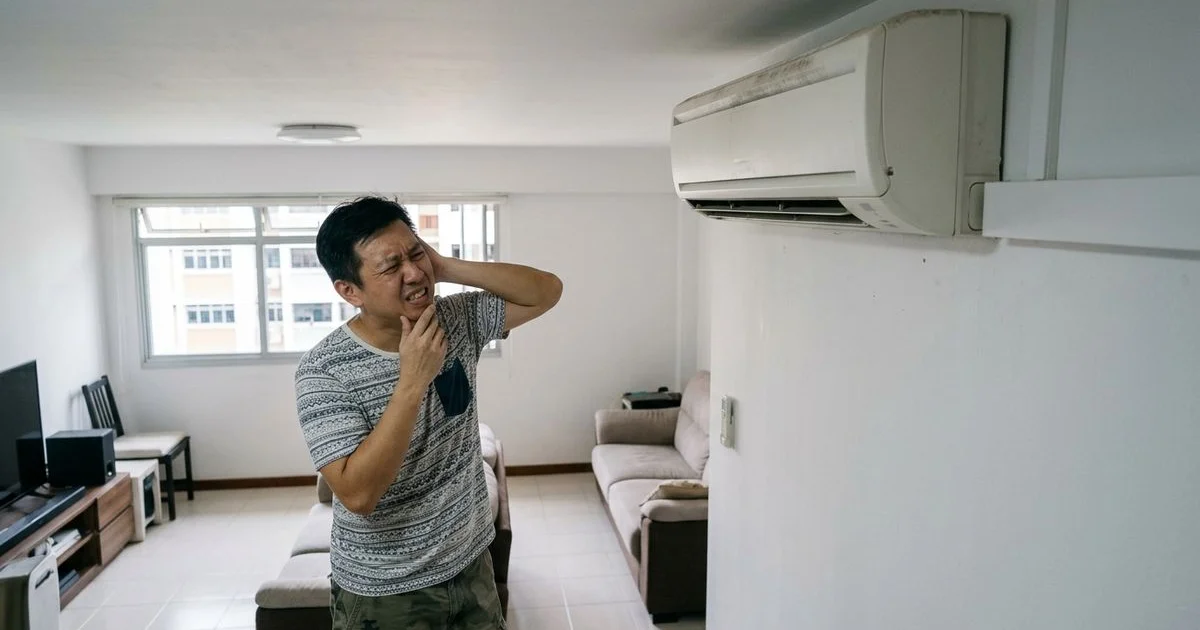
We step into sweaty, uncomfortable homes every single day as a professional service team. A sudden aircon noisy bad smell situation usually means your cooling unit is losing the battle against Singapore’s relentless 80 percent daily humidity.
Our technicians find that ignoring these early warning signs almost always doubles repair costs down the line.
Let’s look at the data, what your system is actually telling you, and explore a few practical ways to respond before a minor fault becomes a major breakdown.
Noises, what each sound actually means
Rattling, usually a minor fix
We see rattling issues most frequently in wall-mounted units past their fifth year of service. Loose mounting brackets or a vibrating fan housing are the typical culprits. Our recommended fix involves tightening the structural bolts and replacing any dried-out rubber mounting grommets to combat the structural shifts caused by tropical temperature swings.
You should also listen closely to the type of rattle. Sometimes, a soft ticking sound is just the plastic casing expanding as the room cools down from 32 degrees. Mitsubishi and Daikin units often do this during the first ten minutes of operation.
We advise getting a loose bracket scheduled for repair before it vibrates completely free. Thermal expansion ticking requires absolutely no action.
Clicking, why context matters
We always tell clients that a single click at start-up is just the thermostat relay engaging perfectly. That initial click is completely normal.
Repeated clicking with no cool air means the compressor simply isn’t engaging. This specific symptom usually points to one of these common failures:
- A blown printed circuit board (PCB).
- A severely weakened start capacitor.
- A melted compressor contactor relay.
Our repair logs show that a worn-out component is the leading cause of this rapid noise. You need to call for a professional diagnosis immediately if you hear this sound. Read more about identifying a capacitor or PCB failure to understand the exact repair process.
Hissing, an urgent warning
We classify any continuous hissing sound as an urgent, same-day repair priority. Refrigerant is actively escaping from your system.
This leak could originate from a damaged copper coil, a loose flared fitting, or a worn Schrader valve. Our team strongly advises switching the unit off entirely at the wall if you hear this.
Don’t keep running the system when it sounds like a leaking tire. Running any air conditioner while refrigerant-low actively burns out the expensive compressor. We know that a continuous hiss is very different from a brief, soft water gurgle after shutdown.
Grinding or squealing, stop immediately
We consider grinding noises to be the sound of metal destroying metal. This harsh noise indicates a failing indoor fan motor or completely worn-out pulley bearings.
Continuing to run the system in this state causes catastrophic motor failure. Our 2025 service data shows that waiting to fix a grinding motor often doubles the final cost of repair.
You must switch the power off and book a diagnostic visit immediately. The sound essentially means the system is tearing itself apart from the inside. We have seen total motor lockups happen within hours of the first grinding noise.
Banging or thumping at start, usually the capacitor
We frequently trace a loud thump at start-up back to a severely weakened capacitor. A weak capacitor causes the heavy compressor motor to lurch violently when it tries to draw power.
The immediate replacement of this small electrical part costs around $80 to $200 SGD in Singapore. Our technicians can usually stop the noise immediately with a simple swap.
Here is a quick checklist of noise urgency:
- Normal: Single clicks, soft plastic ticking, brief water gurgles.
- Monitor: Minor plastic rattling, faint humming.
- Urgent: Loud grinding, continuous hissing, rapid clicking.
Smells, what each odour signals
Musty or sour smell, mould
We combat indoor mould growth constantly because Singapore’s average humidity hovers around 80 percent year-round. This extreme moisture grows thick mould inside the dark, cool evaporator coil within just a few months.
The aircon musty smell comes directly from the airflow passing through this slimy coil and blowing straight into your bedroom. Our teams notice this gets worse when homeowners set their temperatures to 25 degrees, as the unit doesn’t run long enough to pull sufficient moisture from the air.
You need to book a chemical wash within one to two weeks of noticing this sour scent. Standard filter cleaning simply does not reach deep enough into the fins. Only a professional chemical solution dissolves this stubborn biological buildup completely.
Burning smell, an urgent electrical hazard
We treat any burning plastic or electrical smell as a serious fire hazard. This terrifying odour usually points to a dangerous winding fault, a chafed electrical wire, or a power relay arcing violently.
Switch the power off at the main wall socket or distribution board immediately. Our safety protocol mandates that you must take these exact steps:
- Do not use the remote control to power down.
- Flip the dedicated aircon breaker switch to the off position.
- Keep the room well-ventilated to clear any smoke.
Do not restart the system until a qualified technician has inspected the internal wiring. The risk of an electrical fire is simply too high to ignore. We often see melted terminal blocks causing this distinct aircon burning smell during peak usage months.
Sour or chemical smell, refrigerant or wash residue
We occasionally leave a faint, soapy residual smell behind for the first cooling cycle after a deep chemical overhaul. That temporary scent is completely normal and clears out within a single day.
A fresh, spontaneous chemical or sweet almond smell is a completely different story. Our field tests confirm that leaking R32 or R410a refrigerant often smells artificially sweet or faintly like nail polish remover.
You should turn the machine off and call for support if this sweet chemical odour appears out of nowhere. Breathing in vaporized refrigerant in an enclosed room is unhealthy. We can use electronic leak detectors to pinpoint the exact source of the escaping gas.
Pet or food smells, circulating indoor air
We often get calls about strange food odours, but the aircon itself is usually just recirculating the existing indoor air. If the smell only appears when the fan runs and you cannot tie it to a mechanical fault, the unit is simply pulling in room pollutants.
The blower fan constantly cycles air over cooking grease, pet dander, or off-gassing building materials. Our experience shows that cleaning the unit alone will not solve the root cause.
A thorough chemical wash paired with significantly better daily room ventilation usually solves the problem. Try opening windows for an hour every morning to flush out stale indoor air. We also suggest avoiding strong air fresheners, as they just coat the internal coils with sticky residue.
Urgency reference guide
We use a simple triage system to prioritize repair calls. Check your symptom against this timeline to know exactly how fast you need to act.
| Symptom | Wait | Same week | Same day |
|---|---|---|---|
| Rattling | ✓ | ||
| Single click | ✓ | ||
| Repeated clicking | ✓ | ||
| Hissing | ✓ | ||
| Grinding | ✓ | ||
| Musty smell | ✓ | ||
| Burning smell | ✓ | ||
| Sour smell (new) | ✓ |
When in doubt, always make the call. The 24/7 dispatch phone screen is completely free of charge. We will tell you straight whether your specific aircon strange noise is urgent or safe to monitor.
Conclusion
We hope this breakdown helps you identify exactly what your cooling system is trying to tell you. Catching a strange sound or a sour odour early is the single most effective way to prevent a catastrophic breakdown.
Our repair records consistently prove that proactive maintenance saves homeowners hundreds of dollars a year.
Take a moment right now to listen to your unit and check for any unusual scents. If you hear anything concerning or detect an aircon noisy bad smell, do not hesitate to reach out. Schedule a diagnostic check with our certified technicians today to keep your home safe, cool, and comfortable all year round.