Aircon Leaking Water? Causes, Immediate Steps & Repair Options
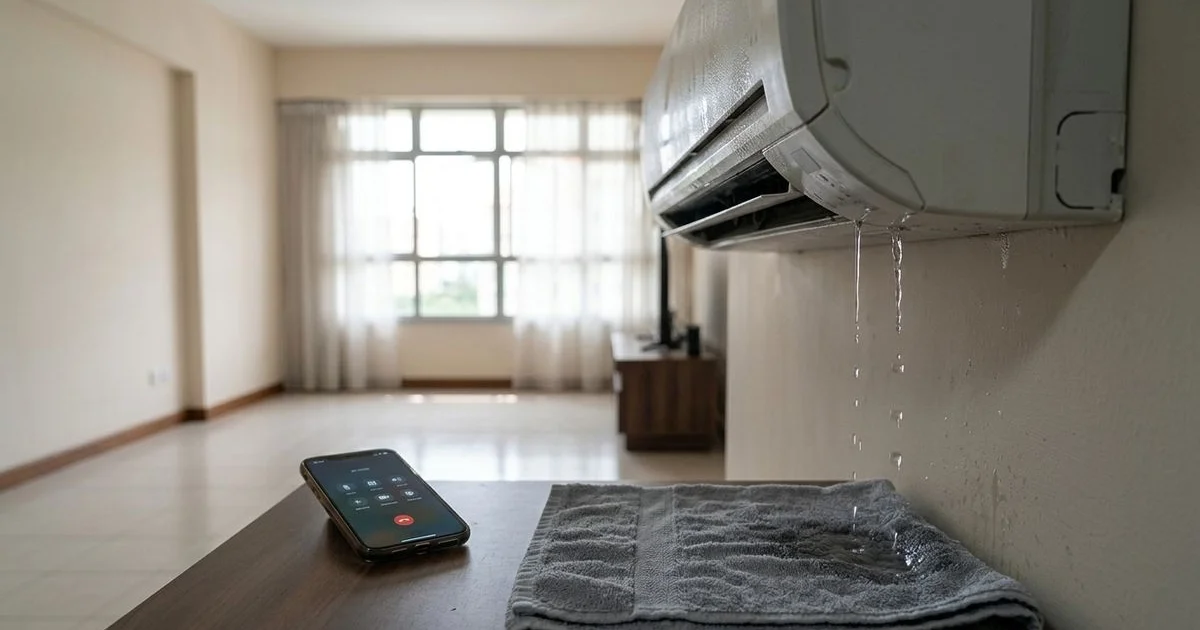
Seeing an aircon leaking water usually triggers instant panic about floor damage. We handle dozens of these calls across Singapore every week.
High local humidity constantly tests indoor drainage systems, making this a frequent issue.
You need to act fast to protect your property. Our active water damage response often qualifies for emergency dispatch. Most West and North-East callouts arrive in under 60 minutes.
Immediate steps before the technician arrives
A leaking unit requires three quick actions to prevent property damage. You must cut the power and contain the spill immediately. We recommend following these exact steps before calling a technician. Doing so protects your home from unnecessary repair bills.
- Switch off at the wall, not just the remote. This cuts power to the indoor unit and immediately stops the drip cycle.
- Place a towel or shallow container. Catching the drips protects your parquet or vinyl flooring from warping.
- Wipe the surrounding walls. Singapore drywall and plaster absorb moisture fast, so surface wiping limits the damage radius.
The five causes (ranked by frequency)
Finding the source of an aircon water leak requires a process of elimination. We rank these common issues based on thousands of local service calls. Here is what usually goes wrong behind the plastic cover.
1. Blocked drainage pipe (most common)
A clogged drainage pipe is the top reason for an aircon dripping water inside. Singapore averages 84% relative humidity, which creates the perfect environment for algae to thrive. We clear this thick biofilm, often called aircon jelly, out of 16mm PVC pipes daily.
Water backs up in the drain tray and eventually overflows down your wall. A simple wet vacuum or compressed-air flush from the outdoor end usually solves it. Our team finds this to be the fastest and most affordable emergency repair.
2. Cracked or dislodged drain tray
Older indoor units often develop hairline cracks in their plastic drain trays. Physical impact during a rough cleaning session can also knock the tray out of alignment. We typically see this structural degradation in units older than eight years.
The condensation simply escapes the tray and drips directly into the room. Tray replacement generally costs between $80 and $150. Our technicians carry common replacement parts for major brands like Daikin and Mitsubishi to fix this on the spot.
3. Frozen evaporator coil thawing
A frozen coil thaws rapidly when you turn the system off, creating a sudden flood of meltwater. The standard drain tray simply cannot handle this extreme volume of water. We always check for low refrigerant or dirty filters when diagnosing ice buildup.
The visible water is just a symptom of a much bigger cooling failure. Read our guide on an aircon not cooling to understand the root cause. Our diagnostic process ensures the coil stops freezing in the future.
4. Improper installation slope
Water will pool and overflow if the indoor unit lacks a proper downward slope. Installers must maintain a precise 1:100 gradient for gravity to pull the condensation away. We often discover this error months or even years after the initial setup.
Sometimes, a unit shifts slightly after being bumped or during a renovation. Remounting the fan coil unit correctly is the only permanent solution. Our team will measure the exact angle issue before quoting the remounting job.
5. Refrigerant leak causing coil-freeze cycle
A slow refrigerant leak forces the evaporator coil to freeze intermittently. This ice eventually melts during the off-cycle and easily overwhelms the drainage system. We strictly use a pressure test to find the exact location of the leak first.
Adding more R32 or R410A gas without sealing the hole just wastes your money. Review our gas top-up process to see why proper leak repair is mandatory. Our repairs focus on long-term stability rather than quick fixes.
What we do on the visit
A standard leak callout takes between 60 and 90 minutes to resolve. The first goal is to stop aircon drip issues to protect your property. We follow a strict diagnostic checklist to ensure the leak stops completely.
Proper testing prevents the unit from leaking again the next day.
- Switch off the power and visually inspect the tray and PVC piping.
- Pour water directly into the drain pan to observe the actual flow rate.
- Flush the blockage using professional wet vacuums if drainage is the issue.
- Run a 15-minute cooling test cycle to verify the repair holds.
A simple drainage clear usually stays under $100 in total. We will always quote you upfront if the unit needs a new tray, coil repairs, or refrigerant work. This transparent pricing gives you complete control over the repair costs.
Conclusion
Dealing with an aircon leaking water is stressful, but fast action minimizes the damage. We resolve most drainage blocks on the same day you call. A swift repair keeps your home safe and cool. Book our technical team today to schedule an immediate inspection. Prompt service is just a phone call away.