What's Included in a Standard Aircon Servicing Session?
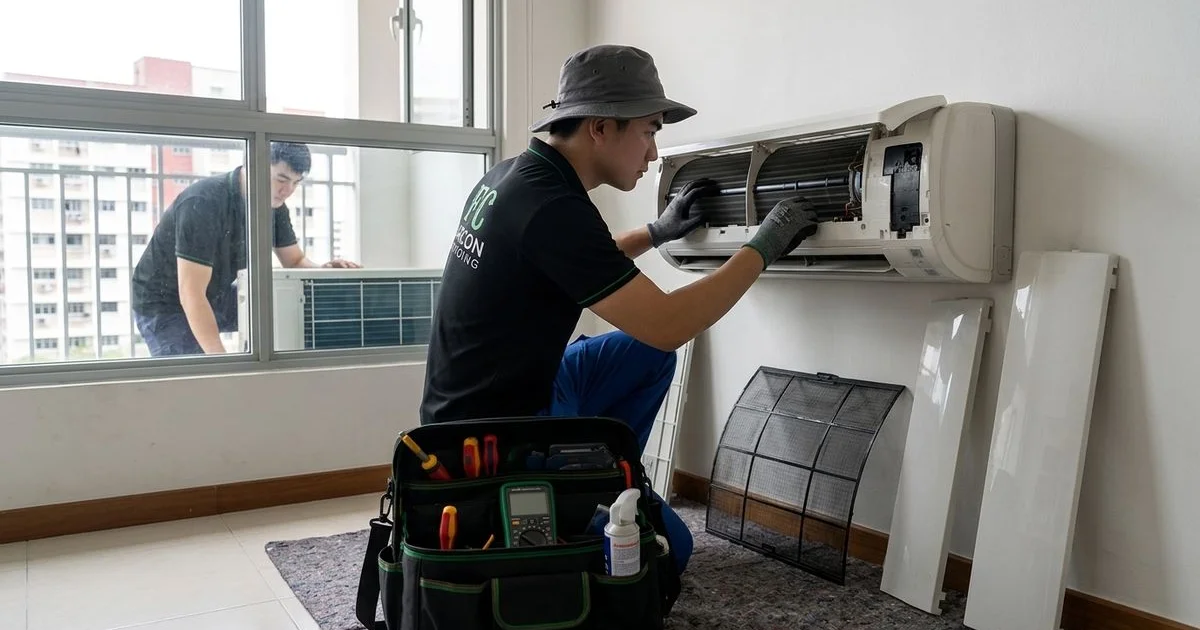
We know exactly how fast a dusty blower wheel turns into a jelly-clogged drain in Singapore’s 84% humidity. That sticky buildup is the main reason your cooling system starts choking.
Our technicians see these issues every single day across HDBs and private estates.
Understanding what is included in aircon servicing helps you prevent those sudden, messy water leaks. We hear the exact same question constantly: what does aircon servicing cover during a routine visit?
This guide breaks down the steps and clarifies the extra costs.
What is included in aircon servicing: the exact checklist
We treat a standard maintenance visit as a preventative health check for your climate control system. A routine appointment in Singapore focuses on flushing surfaces and catching early faults, rather than performing a deep dismantling.
Our typical aircon servicing checklist for a residential indoor unit, like a standard Daikin or Mitsubishi Starmex, covers six specific steps. Each phase is timed carefully to ensure nothing gets missed.
- Filter clean and panel wipe (5 to 10 minutes): Remove the front panel filter, wash it with a mild detergent, and let it dry before replacing it. Wipe down the visible front panel and louvre faces to remove surface dust.
- Evaporator coil surface inspection (5 minutes): Open the cover and visually check the coil for heavy buildup. If mould or sticky biofilm is present beyond normal dust, we flag the unit for a deeper clean.
- Drainage tray flush and pipe clear (5 minutes): Flush the indoor drainage tray thoroughly. Clear the drain pipe with a flexible rod or compressed air from the outdoor end to stop 80% of annoying water-leak callouts before they happen.
- Refrigerant pressure check (5 minutes per system): Attach a manifold gauge to the Schrader valve to read the actual running pressures. This step confirms the gas charge is within the manufacturer’s specification.
- Electrical connection and capacitor test (5 minutes): Place a multimeter on the capacitor and relay terminals to spot early signs of failure. Catching a weak capacitor now prevents your compressor from failing to start on a 32-degree day.
- Outdoor condenser fin clean (10 to 15 minutes): Rinse the outdoor unit’s coil fins with water and remove any trapped debris. Clearing this grime restores the crucial heat exchange capacity that keeps your room cold.
What the aircon service scope does not cover: and what it costs separately
We always explain that standard servicing is strictly preventative. Heavier maintenance or repair work falls outside the basic aircon service scope and gets quoted separately.
Our pricing model stays transparent to help you make informed decisions. Here is a breakdown of the typical extra charges you might encounter in Singapore right now.
| Service Type | Typical 2026 Price Range | When You Actually Need It |
|---|---|---|
| Chemical Wash | $85 to $150 per unit | Annually. Removes stubborn biofilm and mould from the coil face. |
| Chemical Overhaul | $150 to $300 per unit | Every 1 to 2 years for heavy use. Requires full dismantling. |
| Gas Top-Up | $25 to $80 per system | Only after a leak test. R32 and R410A are the standard coolants. |
| Capacitor Replacement | $80 to $150 | When the multimeter shows the microfarad reading is dropping. |
| PCB Replacement | $150 to $400+ | If the main control board fails due to a power surge. |
We quote any of these extras before picking up a wrench. The price of your routine visit stays exactly as promised.
Our team leaves the final decision on additional work entirely up to you. A sealed system should never slowly leak gas, so insist on a pressure test before paying for a refill.
What the technician brings to your home
We equip every service van to resolve the most common faults in a single visit. Returning to your home a second time wastes your day and usually adds a $50 call-out fee.
Our standard field kit includes high-end diagnostic tools like Fieldpiece multimeters and Robinair vacuum pumps. Proper preparation keeps the messy work contained and protects your property.
- Diagnostic Gear: Refrigerant pressure manifold gauges and professional multimeters deliver accurate electrical testing.
- Refrigerant Equipment: A vacuum pump handles safe gas work.
- Common Spares: Standard 35-microfarad capacitors, temperature sensors, fuses, and popular PCB modules sit ready in the van.
- Cleaning Supplies: Alkaline cleaning solutions, flexible drainage rods, and compressed air canisters clear out blockages.
- Property Protection: Heavy-duty floor sheeting and waterproof canvas catch-bags protect your HDB walls from chemical splashes.
We plan the inventory carefully for multi-unit jobs. Servicing three or four units takes more time on-site, but the van holds enough supplies to handle it.
How servicing fits with chemical wash
We treat standard washing and chemical treatments as two distinct but complementary services. Standard servicing flushes away loose debris, while a chemical wash dissolves the hardened grime stuck deep inside the coil.
Our technicians recommend using the two approaches together for maximum efficiency. According to recent energy studies, keeping that coil clean reduces power consumption by up to 15%.
We structure the ideal maintenance timeline into two main phases:
- Quarterly standard servicing: A basic flush every three to four months prevents drain clogs.
- Annual deep cleaning: A full chemical wash strips the sticky biofilm right off the coil.
Locking in this cadence is cheapest through a service contract.
We manage the scheduling, send automatic reminders, and apply immediate discounts to parts when you need them. This proactive approach extends the lifespan of your compressor by several years.
Conclusion: keeping your home cool and efficient
We hope this breakdown clarifies exactly what happens during a professional maintenance visit. Knowing what is included in aircon servicing helps you spot shortcuts and demand high-quality workmanship.
Our priority is keeping your Singapore home comfortably cool without sudden, expensive breakdowns. Book your next preventative service today to secure that peace of mind.