Switching Aircon Service Providers Without Losing What You've Paid For
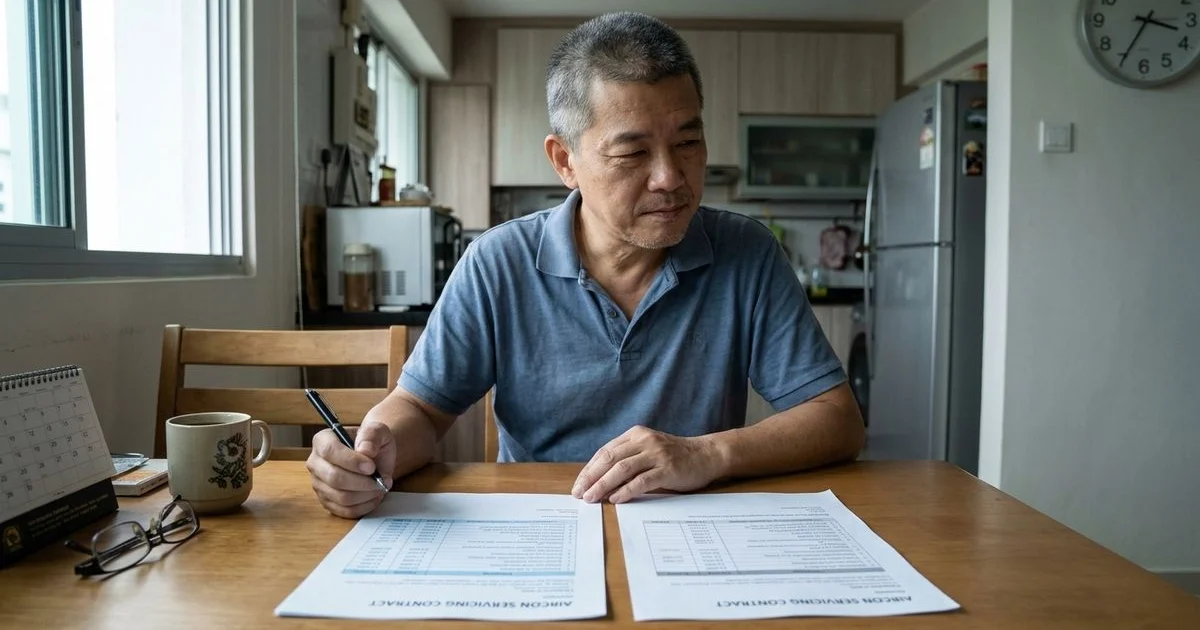
You know how frustrating it is when your maintenance team stops delivering, but you feel stuck in a yearly agreement.
We see homeowners hesitate to switch aircon service provider options because the paperwork feels like a minefield. That hesitation often leads to enduring bad service or surprise breakdowns right when the Singapore heat peaks.
The reality is that moving away from a subpar agreement is much simpler than most people think.
Our team will break down the specific contract clauses you need to check and outline a clean transition plan. If you are still weighing whether to commit at all, How Aircon Service Contracts Pay for Themselves walks through the 12-month math. Let’s look at the exact steps to make a change without risking your warranty or paying double.
Before you switch aircon service provider, read your current contract
You must review your existing agreement for notice periods, exit fees, and auto-renewal clauses before making any changes. Checking these three specific areas prevents surprise charges and legally releases you from the service.
Notice period
Most contractors in Singapore require a 30-day written notice for cancellation. We recommend checking if your agreement demands this notice via a formal letter or if a simple email will suffice.
A 2025 review of standard local agreements shows that failing to provide this 30-day window is the most common reason homeowners get billed for an extra cycle. Some companies lock you in for a minimum term, while others operate on a flexible month-to-month basis.
Early-exit clauses
Finding terms like “minimum term” or “lock-in period” usually means you will face an early termination fee. Our experience shows that standard administrative exit fees in Singapore currently average around $50.
| Action | Estimated Cost | Outcome |
|---|---|---|
| Finish bad contract | Full remaining term price | Risk of major breakdown and poor cooling |
| Pay exit fee | ~$50 standard SG penalty | Immediate improvement with a reliable team |
If your agreement has a 12-month term and you are 7 months in with a $50 early-exit fee, leaving might still be a net positive. You must calculate if paying this penalty is cheaper than finishing a contract with a company that delivers poor chemical washes or late services.
We always advise clients to weigh the immediate cost against the long-term benefits of proper cooling. Making a smart financial choice requires looking at the big picture.
Auto-renewal
This specific clause is where many unsuspecting customers get caught. Our technicians constantly hear from clients who missed their 30 to 60-day cancellation window, locking them into another 12-month cycle.
The Consumer Protection (Fair Trading) Act (CPFTA) in Singapore monitors unfair “subscription traps,” meaning your provider must clearly state auto-renewal terms. You should immediately locate your expiry date and set a calendar alert two months prior.
What to ask your current provider
You need to ask your current technician exactly when your term ends, what the notice period is, and if there are penalties. Getting these details in writing protects you from disputes when you finally leave the aircon contract.
Before signing anywhere new, ask these three honest questions:
- “When does my contract end?”
- “What is my cancellation notice period?”
- “Is there an early-exit fee?”
We strongly advise sending these questions via email or WhatsApp rather than making a phone call. Written confirmation prevents the classic “we didn’t agree to that” argument later on.
Taking this simple step ensures a clean break. Our administrative team has helped countless homeowners use these exact written records to avoid disputed charges during a handover. If a provider refuses to answer in writing, that is a massive red flag.
The FC transfer process
Transferring your servicing to a new team involves a clear four-step procedure starting with a fast quote and ending with a comprehensive system baseline. You simply provide your current end date, and the transition happens without any overlapping payments.
If you decide to transfer aircon contract duties to FC Aircon, the handover is highly structured. Our transition protocol ensures you never pay two companies for the same month of cooling.
Step 1: Quote and timeline
A transparent, no-obligation quote arrives in your inbox within 24 hours of your inquiry. This document clearly shows the new contract terms, pricing, and any transition incentives available for Singapore residents. You only need to provide your home address, the total unit count, and your current expiry date.
Step 2: Pro-rated start date
Your new servicing schedule officially begins the exact day after your old one ends. We design this pro-rated system to guarantee zero overlap and zero double payments.
Exiting an old agreement mid-term simply means your new start date aligns with your final cancellation completion. This financial efficiency keeps your household budget intact.
Step 3: First visit baseline
During the initial scheduled visit, trained specialists perform a complete diagnostic inspection to document the condition of each fancoil and compressor. We use this detailed baseline report to measure performance and efficiency during all subsequent visits. Finding any pre-existing faults means the technician will flag them honestly upfront, giving you a clear picture of your system’s health.
Step 4: Standard cadence kicks in
Your regular maintenance rhythm begins immediately after the baseline check. We schedule quarterly visits for residential HDB flats or monthly visits for commercial spaces.
Clients then receive all standard contractual benefits, including priority dispatch during heatwaves, discounted chemical overhauls, and cheaper replacement parts. This predictable cadence keeps your electricity bills low and your air quality high.
Common pitfalls to avoid
The biggest mistakes homeowners make include cancelling without a backup plan, losing prepaid cash credits, and voiding active manufacturer warranties. You must secure your new start date and verify your warranty conditions before sending a cancellation notice.
We have compiled the most frequent transition errors to help you change aircon contractor smoothly:
- Cancelling before confirming the new contract. Do not sign anywhere or cancel anything until your new service start date is confirmed in writing.
- Forgetting prepaid credits. Several Singapore providers sell prepaid visit packages. You should ask if unused credits are refundable or if they expire at the end of the term.
- Switching mid-overhaul. Stopping a chemical overhaul or major compressor repair halfway through creates massive warranty disputes. Finish the current repair job before initiating a transfer.
- Voiding the warranty period. Major brands like Daikin and Mitsubishi Electric offer 5-year compressor warranties, but only if maintained by certified technicians. You must check if moving to a new team violates the terms set by your original certified installer.
When NOT to switch
You should delay changing providers if your contract expires in less than 60 days, if you are mid-repair, or if your system is still under a strict installation warranty. Waiting for these specific conditions to clear prevents unnecessary administrative fees and legal headaches.
We recommend staying with your current company in a few specific scenarios:
- Less than 60 days until the current contract ends. Wait it out and switch cleanly at renewal.
- Mid-major repair. Finish the ongoing repair with the current contractor first.
- Within installation warranty period. Do not risk voiding a new system’s guarantee.
- An isolated mistake. If your only complaint is one bad visit rather than systemic failure, give them one chance to rectify it.
For almost every other situation, moving to an agreement that fits your actual usage and charges transparently is incredibly straightforward.
Our team is ready to answer any questions you have about the transition process.
Talk to us for a fast quote to switch aircon service provider today. You make no commitment until you have reviewed the paperwork.