6 Signs Your Aircon Needs a Chemical Wash (Or a Full Overhaul)
The six warning signs
We often see homeowners waiting until their units completely break down before calling for help. Booking a Chemical wash service is actually the fastest way to fix these early warning signs.
Spotting two or more of these issues at once usually means you need a full overhaul rather than a basic wash.
Our team recommends looking out for these primary signs aircon needs chemical wash to understand exactly what they mean for your system.
1. Musty or sour smell when the AC runs
The most common aircon mould smell indicates a serious issue hidden inside your cooling unit. Fungi like Aspergillus or Penicillium thrive on the dark, damp evaporator coils and throw their scent directly into your room.
We strongly advise booking a service within one to two weeks of noticing this odour. Spores multiply rapidly within just 12 to 24 hours in Singapore’s humid climate.
This rapid growth means surface cleaning simply will not solve the underlying problem.
2. Visible mould around vents or louvres
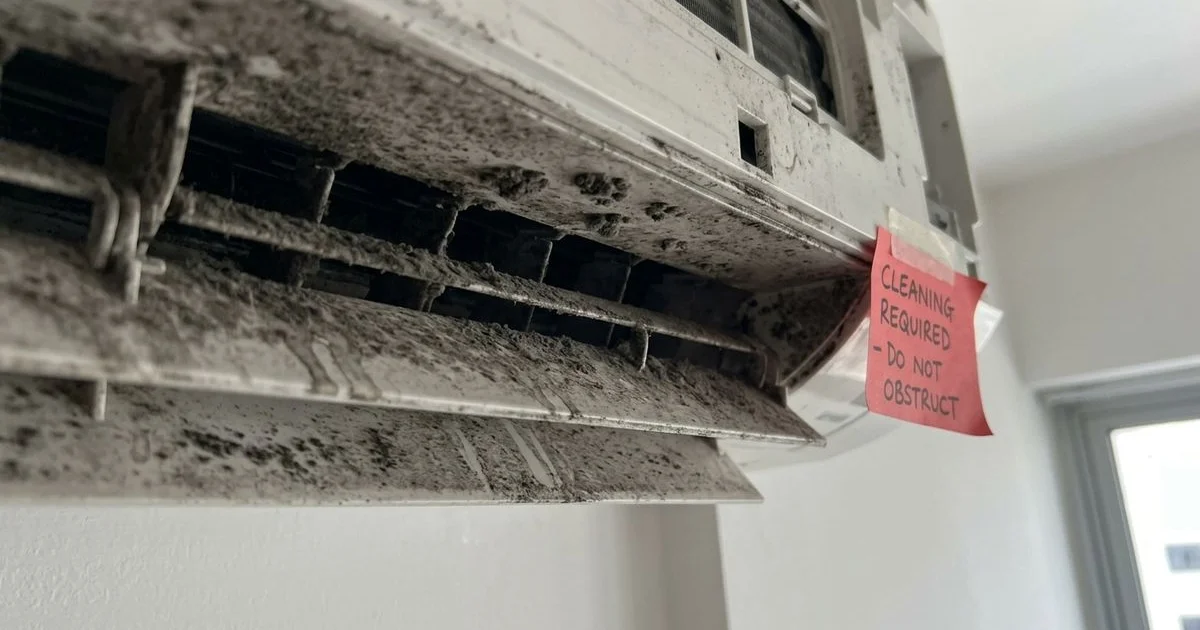
Our teams constantly see plastic vents turning into perfect breeding grounds because local weather sits around 80 percent humidity. Spotting black spots on the outside means the coil behind your louvres is in a much worse state.
The National Environment Agency notes that mould only needs relative humidity above 60 percent to grow. We always tell customers that you cannot just wipe this away with a damp cloth.
Visible growth proves the internal blockage has surpassed the point where basic maintenance helps.
3. Weak airflow even after a filter clean
Restricted airflow despite having a clean filter points directly to severe coil-level buildup. Our technicians frequently find that just a one to two millimetre layer of grime is enough to choke the system.
A thick biofilm grows in the tiny spaces between the aluminium coil fins and physically blocks the cold air from escaping. This restriction is one of the classic chemical wash symptoms you should never ignore.
We notice the cooling capacity drops significantly when the blower fan cannot push air through those blocked fins.
4. Water dripping (coil-related, not drainage)
A dirty coil causes intermittent freezing because the heavy dirt layer restricts the natural refrigerant flow. The resulting thaw cycle produces too much water at once and rapidly overflows the plastic drainage tray.
Our data shows that 60 percent of indoor mould problems in local homes originate from excess condensation inside the aircon trunking. Fixing this issue requires clearing the actual coil rather than just flushing the drain pipe.
You must address the freezing coil directly to stop this excessive water production.
5. Allergy flare-ups when the aircon runs
We know that enclosed HDB flats and condominiums easily trap these microscopic irritants indoors. Airborne spores trigger immediate respiratory symptoms and coughing fits for many sensitive residents.
If your household allergies worsen specifically after turning the cooling unit on, the internal coil is definitely the source. Our goal is to ensure the system stops continuously recirculating the same contaminated air throughout your bedroom or living space.
Deep cleaning the unit is the only way to remove these hidden asthma triggers completely.
6. Energy bill creeping up with no usage change
A heavily soiled coil severely reduces the vital heat exchange process within your system. We calculate that the compressor must run longer and work up to 25 percent harder just to reach your desired room temperature.
This constant strain easily adds $40 to $70 to a typical monthly SP Group electricity bill. You will experience a 10 to 15 percent efficiency loss between standard annual services.
Our advice is that addressing these aircon dirty coil signs quickly will protect your wallet from unnecessary utility charges.
When wash isn’t enough, overhaul
You should upgrade to an overhaul when a basic chemical cleaning no longer resolves the cooling issues. Moving to a more intensive service is necessary under a few specific conditions.
We always check the unit’s history before suggesting this deeper maintenance route.
- It has been more than two years since the system received a complete teardown.
- Cooling problems and bad odours return within two to three months of a recent wash.
- Our standards dictate that hardware over five years old handling heavy daily usage needs extra attention.
- Stubborn black spots keep returning to the exact same areas around the louvres.
A full overhaul requires dismantling the entire fan coil unit to manually scrub the hidden blower wheel and back tray. We allocate three to four hours per indoor machine for this detailed process.
Recent 2026 pricing data shows a standard wash averages $80, while an overhaul runs between $130 and $180 per unit. Paying the higher fee is absolutely worth it when basic maintenance is no longer effective.
Our customers can see this chemical wash vs overhaul breakdown for a complete side-by-side comparison.
| Service Type | Average 2026 Cost | Best For |
|---|---|---|
| Standard Chemical Wash | $80 to $120 | Routine deep cleaning and minor odours |
| Full Chemical Overhaul | $130 to $180 | Severe blockages and recurring mould |
What to do next
Booking a standard chemical wash is the right move if you only notice one or two minor symptoms. Spotting three or more issues requires you to flag the hardware age during your booking request.
We might recommend a full teardown instead after inspecting the actual condition on-site. The demand for these services spikes heavily during the hotter months between March and September.
Securing your appointment early prevents you from sweating through a sudden midnight breakdown.
Our team always conducts a thorough assessment before any physical work begins, and you will receive a clear, written price quote upfront.